I am a doctor. Almost every morning I place a stethoscope upon another human chest, searching for murmurs, listening for rhythms, trying to keep hearts from breaking. Today, it is my own heart that is bleeding. Not because I have seen death because we, doctors learn to live with death. Certainly not because I have watched suffering; suffering is the language of our profession.
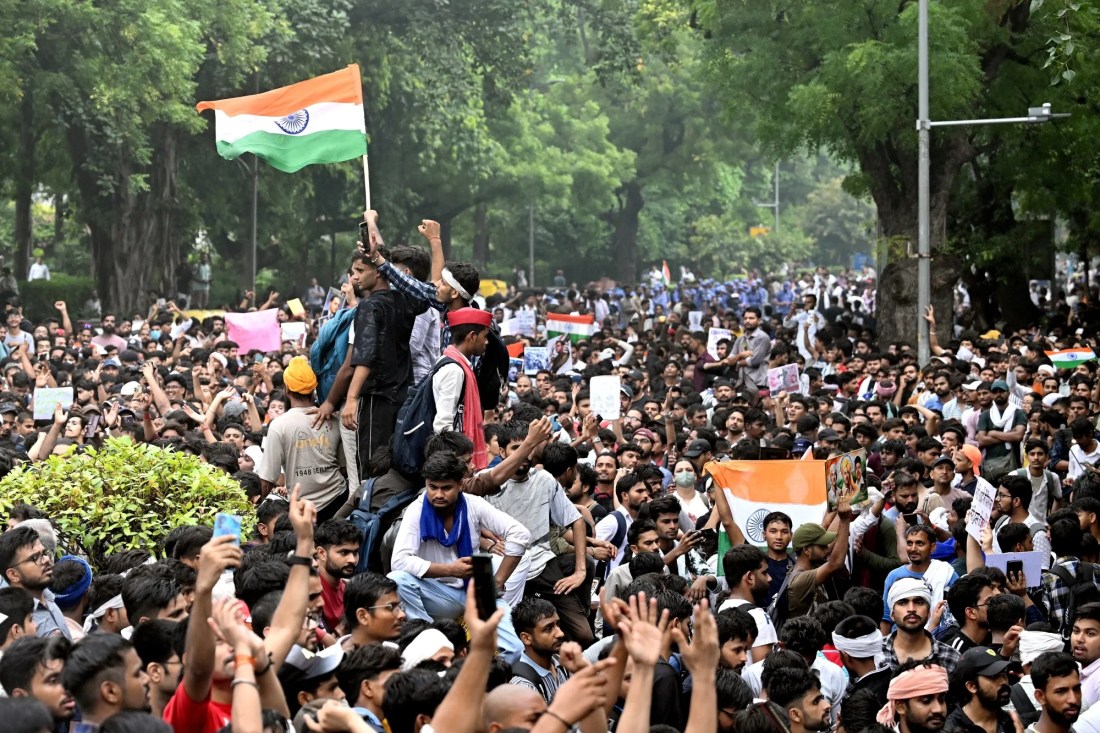
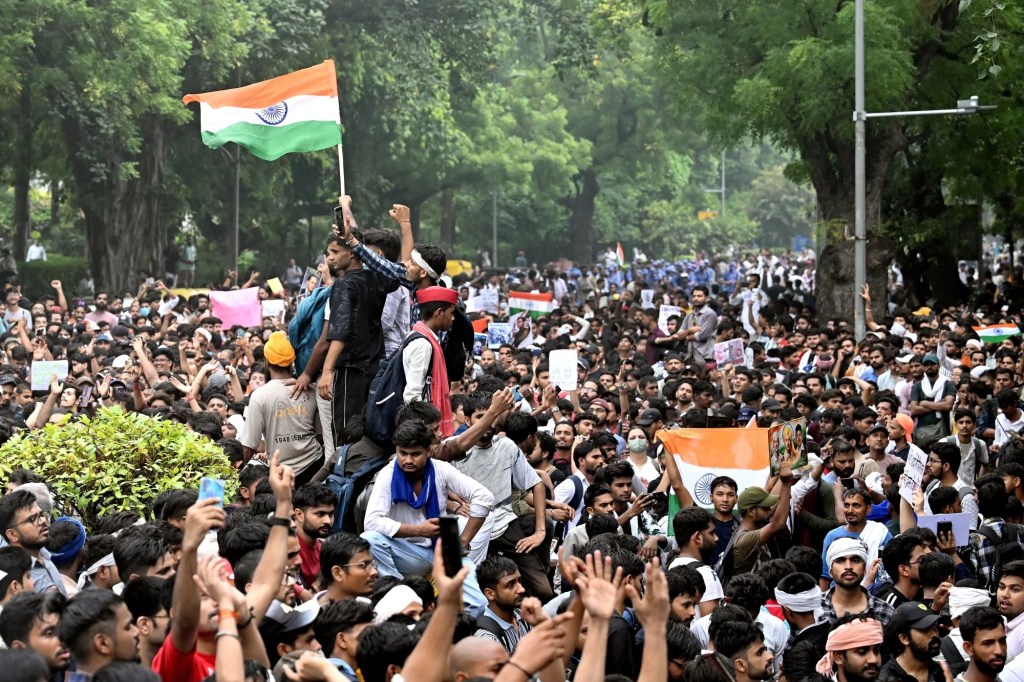
My heart bleeds because I am watching something even more terrifying than disease. I am watching a nation slowly lose faith in justice. I see students and youth standing on the streets of Delhi, not asking for privilege, not demanding shortcuts, but pleading for something that should have been guaranteed from the beginning – a fair chance. Every stone on Jantar Mantar has learnt a new language – the language of waiting. Waiting for justice. Waiting for answers. Waiting for someone in power to look into the eyes of a generation and simply say, ‘We hear you.’ How many times can a young mind be asked to believe in merit after watching faith itself collapse?
The NEET paper leak was not merely an examination scandal. It was the public execution of trust. Millions study under dim lights. Millions sacrifice birthdays, festivals, childhood itself. Parents sell land. Mothers pawn their jewellery. Fathers work until their hands crack, believing that education is the one path no one can steal. Then came the paper leak. It was not merely a leak. It was a wound. A wound inflicted upon the very idea of merit. And when those wounded children cried out, many felt they encountered not the embrace of a compassionate Republic but the ice-cold language of institutions unwilling to acknowledge the depth of their anguish.
What is a doctor supposed to do? I can transfuse blood. I cannot transfuse hope. I can suture flesh. I cannot stitch together a young mind whose faith has been torn apart. I can prescribe medicines. I cannot prescribe justice. As physicians, we are taught that pain ignored becomes disease. A society is no different. Ignore the pain of its youth, and the disease spreads into every institution. Today education and healthcare are commodities. Medical science itself is a commodity. Education was once described as the great equaliser. Today it is increasingly treated as a marketplace. While schools compete like corporations, universities advertise like brands. It is the rule of the coaching raj. Coaching industries flourish into multi-billion-rupee empires. Hospitals, the sacred institutions of healing, have become investment portfolios. Medical colleges, the places where physicians were once moulded, have become business ventures. Knowledge has become merchandise. Even dreams are becoming commodities. The child of privilege purchases opportunity. The child of poverty purchases hope with hunger. This is not merely the commodification of education. It is the commodification of human possibility.
Everything is for sale. Everything has a price. Except the lives that create the wealth. I entered medicine believing that knowledge was sacred. That healing was sacred. Today I watch coaching factories replace classrooms, corporate hospitals replace compassion, and market value threaten to eclipse human value. But the market has never comforted a mother whose child lost faith in justice. The market has never sat beside a student who spent years preparing for one examination only to wonder whether merit still matters.
And I ask myself: What are we becoming? They tell us this is democracy. I ask: Democracy for whom? They tell us the State is protecting law and order. I ask: Order for whom? I once read somewhere what Tolstoy had said: ‘The power of the State lies in the ignorance of its people.’ I ask myself today: Whose interests does the State ultimately serve? Who is heard?
Who is ignored? Who receives protection? Who receives barricades? Is democracy only the freedom to cast a vote every few years? Or is it also the assurance that when millions of young citizens lose confidence in a national examination, their anguish will be met with transparency instead of defensiveness, accountability instead of dismissal, compassion instead of distance? If voices from the streets must first prove their patriotism before they are heard, then democracy has begun to lose its hearing.
Ever since I was a child, I have admired one doctor who heralded a revolution: Ernesto Guevara de la Serna. Che wrote that the true revolutionary is guided by great feelings of love. How profoundly true. Because only love can make another person’s suffering feel like your own. Only love can make a doctor weep for students he has never met. Only love can make strangers stand together in the rain demanding justice for someone else’s child. The revolutionary loves humanity so intensely that injustice becomes unbearable. He cannot walk past suffering as though it were ordinary. He cannot accept a world where children inherit debt instead of opportunity. Where patients inherit invoices instead of healing.
This love must become consciousness, and consciousness must become organised struggle. Tears alone do not change history. Anger alone does not transform society. Only a people who understand the roots of injustice can hope to remove them. Outrage, however righteous, dissolves unless guided by scientific analysis, disciplined organisation, and a correct revolutionary understanding rooted in the interests of the working people.
The task before us is to understand. To organise. To educate. To unite. To build. The rulers of every age have believed that barricades could stop history. History has always smiled. Because history is not written by barricades. It is written by ordinary people who refuse to surrender hope. Every empire eventually becomes a chapter. Every silence eventually becomes a question. And every question, if it belongs to the people, eventually becomes a movement. Perhaps that is why Delhi cannot sleep. Because beneath its asphalt, beneath its ministries, beneath the marble corridors of power, a generation is asking one simple question that no government, no police force, no marketplace, and no empire has ever been able to silence: If education is not a right but a commodity…if healthcare is not a duty but a business…if democracy listens only to power… then whose Republic is this?
Tonight, Delhi is not merely protesting. Delhi is grieving. And somewhere beneath the slogans, beneath the police barricades, beneath the television debates, beneath the speeches, I hear something quieter. The sound of a generation asking whether honesty still matters. Whether hard work still matters. Whether truth still matters. As a doctor, I know that when a patient says, ‘Doctor, I am in pain,’ the worst diagnosis is not the disease. The worst diagnosis is when nobody believes the patient. That is where my heart breaks. Because I recognise the look in those young faces. It is the look of someone saying”: ‘Please believe my pain.’ I do. I am a doctor. I cannot walk past suffering and pretend not to see it. My oath forbids it. My conscience forbids it. My humanity forbids it. And tonight…my heart is bleeding.