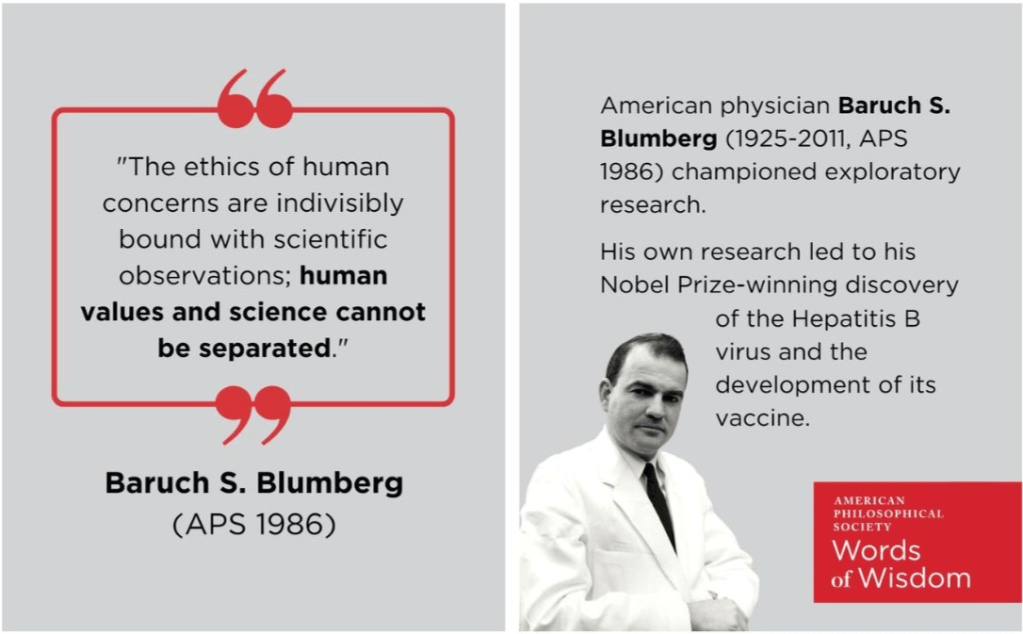
“The ethics of human concerns are indivisibly bound with scientific observations”
– Baruch Blumberg
Today an elderly woman came to my OPD with her daughter and granddaughter. She used to work as a domestic help. A few days ago she had undergone some blood tests. One of them showed that she was Hepatitis B positive. Not liver failure. Not even active disease. An asymptomatic inactive carrier. Someone had seen the report. Then the whispers started.
Soon she was told not to come for work anymore. Jobless, penniless, and in abject despair, she had been running from pillar to post, from this clinic to that hospital just to know what this ‘hepatitis’ was. Something so sinister that had made her already difficult life totally unbearable! As she sat before me, she kept looking at the papers in her hand. Then she asked, almost in a whisper, “Sir, what has happened to me?”
I explained as simply as I could. She listened carefully and nodded. Then she asked another question. This time it was not about Hepatitis B. “Why don’t people touch me?”
I did not know what to say immediately. She went on. “They move away when I sit near them. They tell me not to touch things. Even in hospitals, some people keep a distance after seeing my report.” There was no anger in her voice.
Only bewilderment.
As if she was trying to understand when exactly she had become someone to be feared. Her granddaughter stood beside her, holding the edge of her saree.
Three generations had come to understand a blood test. Instead, they had encountered stigma.
My teacher, Professor Shivaram Prasad Singh, the person who had started the observance of July 28 as World Hepatitis Day for the first time in the world, used to tell us about the pressing need of awareness regarding Hepatitis B.
Long before awareness campaigns became fashionable, he was talking about hepatitis, educating people, fighting myths. He often spoke about his interactions with the person who had discovered the virus itself, Nobel Laureate Professor Baruch Blumberg and about the need to remove the fear surrounding the disease.
Without thinking much, I reached out and held her hand. Then I offered her water from my bottle. She looked surprised. After some hesitation, she drank.
I took the bottle back and drank from it myself.
Not to prove anything. Not to make a point.
It just felt like the natural thing to do. Tears welled up in her eyes.
As she was leaving, her face looked different.
Relieved, perhaps. Not because her Hepatitis B had disappeared. But because for a few minutes she had been treated not as a virus, not as a report, not as a danger. Just as a fellow human being.
After she left, I kept thinking that Hepatitis B is not the only thing people carry. Many carry loneliness. Many carry humiliation. Many carry the burden of being avoided.
The virus is often easier to deal with than the stigma. In medicine, treatment needs to begin with something as simple as a touch. The humane touch.

